
Anúncios
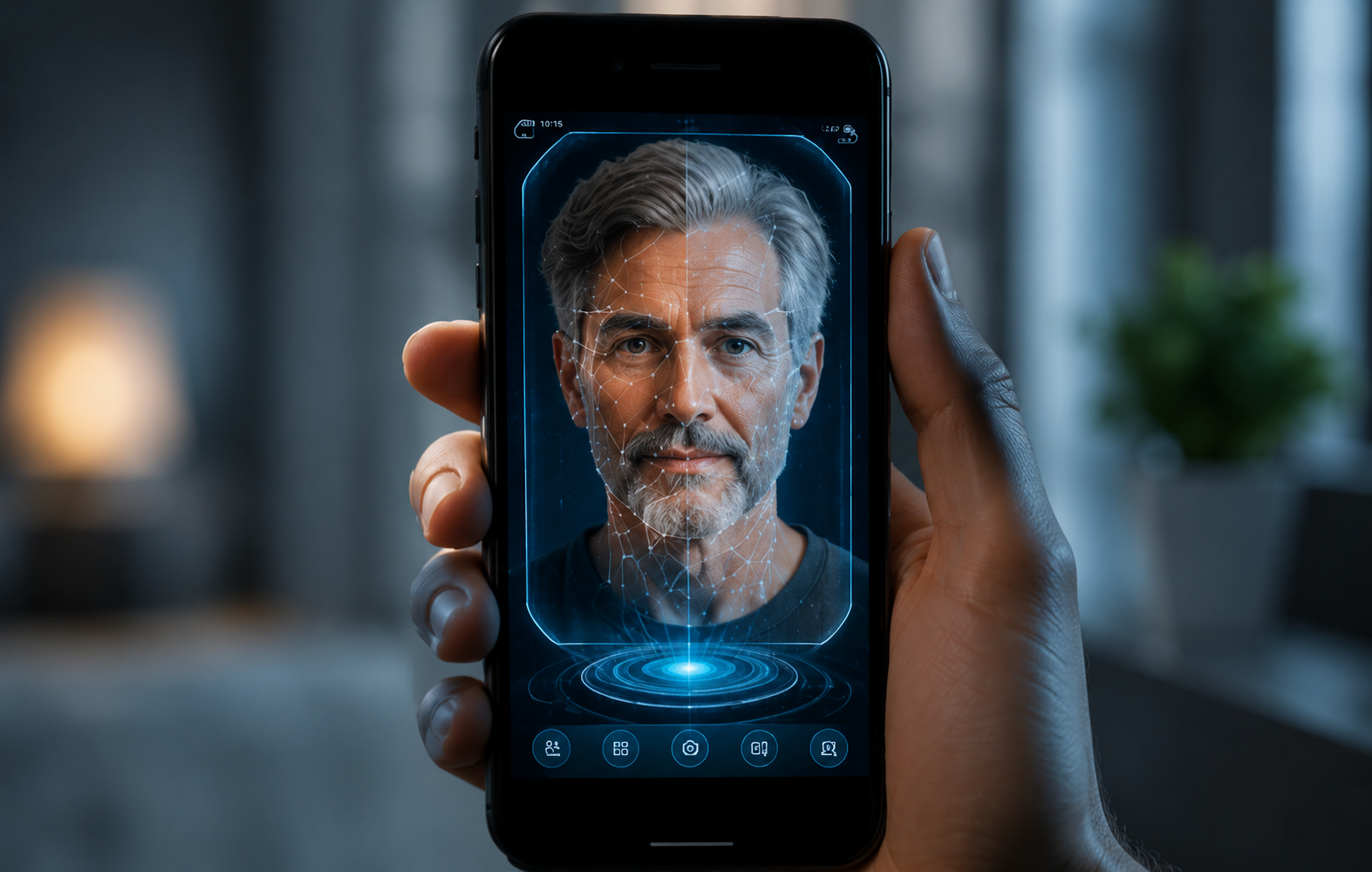
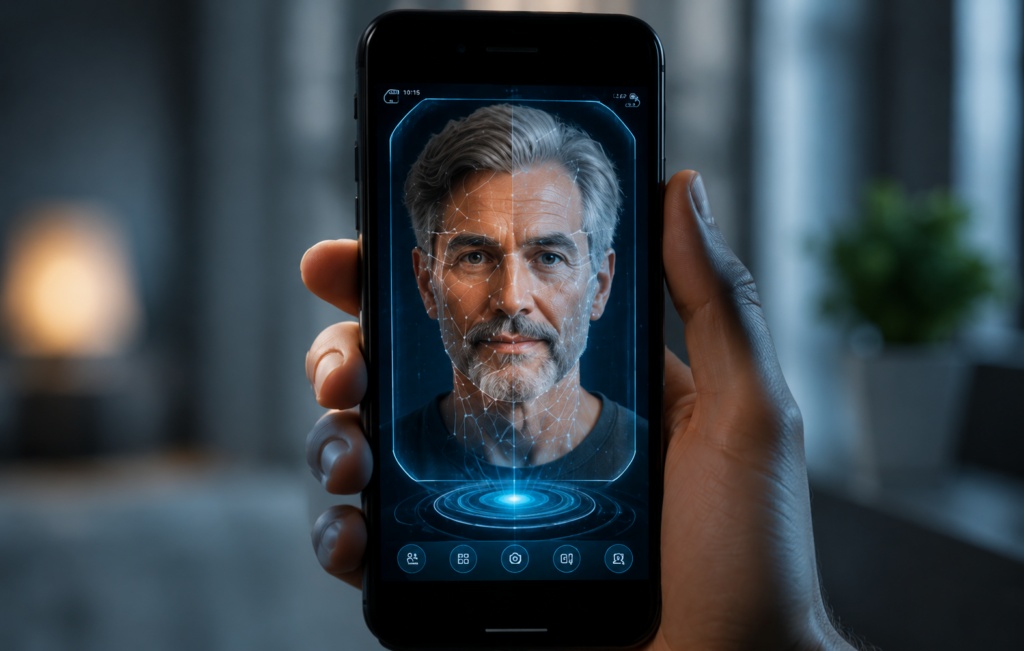
Imagine seeing your future face with just a tap on your phone—technology now makes this possible through AI-powered apps that predict how you’ll age.
Artificial intelligence has transformed how we interact with photos and selfies. What once required expensive software and professional expertise now fits in your pocket. Face transformation apps use sophisticated algorithms to analyze facial features, skin texture, and bone structure to project how time will reshape your appearance.
Anúncios
These applications aren’t just novelty toys—they combine machine learning, neural networks, and vast databases of aging patterns to deliver surprisingly accurate predictions. Whether you’re curious about your golden years or want to see how lifestyle choices might affect your looks, future face AI apps offer a fascinating glimpse into what lies ahead. Let’s explore everything you need to know about these remarkable tools.
🤖 How AI Face Aging Technology Actually Works
The science behind face transformation apps is more complex than most users realize. These applications rely on deep learning models trained on millions of facial images across different age groups, ethnicities, and genders.
Anúncios
When you upload a photo, the AI first maps your facial landmarks—eyes, nose, mouth, jawline, and forehead. It identifies unique characteristics like bone structure, fat distribution, and skin quality. The algorithm then applies aging patterns learned from its training data to predict how these features will evolve.
Advanced apps consider multiple factors including genetics, environmental exposure, and even lifestyle indicators visible in your current appearance. The neural network analyzes wrinkle formation patterns, skin elasticity changes, hair thinning probabilities, and volume loss in specific facial areas.


The Machine Learning Process Behind Age Prediction
Modern face aging apps use convolutional neural networks (CNNs) that have been trained on paired images—the same people photographed at different life stages. This training helps the AI understand natural aging progressions rather than simply adding wrinkles to faces.
The technology distinguishes between superficial aging signs and structural changes. Superficial changes include fine lines, age spots, and skin texture variations. Structural changes involve bone resorption, muscle tone loss, and fat redistribution that occurs naturally with aging.
✨ Top Features to Look for in Future Face Apps
Not all face transformation applications are created equal. The best ones offer features that go beyond simple aging filters to provide meaningful, personalized results.
High-quality apps provide multiple age progression options, allowing you to see yourself at various life stages—30s, 40s, 50s, 60s, and beyond. They should also offer reverse transformations, showing younger versions or how you looked in past decades.
- Gender transformation capabilities that show how you’d appear as a different gender
- Ethnicity visualization to explore how you might look with different heritage features
- Baby prediction showing potential offspring by combining two faces
- Celebrity lookalike matching connecting your features with famous faces
- Time-lapse video creation animating your aging process smoothly
- HD output quality ensuring your transformed images remain sharp and realistic
Privacy and Security Considerations
Since these apps require uploading personal photos, privacy becomes paramount. Reputable applications should clearly state their data handling policies, including whether images are stored, shared, or used for further AI training.
Look for apps that process images on-device when possible, minimizing data transmission. Check if the service automatically deletes your photos after processing and whether you can manually remove your data from their servers.
🎯 Practical Uses Beyond Entertainment
While seeing your older self is fun, future face AI apps serve practical purposes across various fields. Medical professionals use similar technology to show patients potential results of reconstructive surgery or the effects of certain treatments.
Dermatologists employ aging simulation tools to demonstrate how sun damage accumulates over time, motivating patients to adopt better skincare habits. This visual evidence often proves more convincing than verbal warnings about premature aging.
Forensic and Missing Persons Applications
Law enforcement agencies use advanced age progression technology to update photos of long-missing children or fugitives who’ve been at large for years. These applications have contributed to successful identifications and family reunions.
The same AI principles power these professional tools, though with greater accuracy requirements and more extensive databases. Commercial apps offer consumers a taste of this sophisticated technology in an accessible format.
📱 Getting Started with Your First Face Transformation
Using a future face app is straightforward, but following best practices ensures optimal results. Start by selecting a clear, well-lit photo where you’re facing the camera directly without obstructions like sunglasses or heavy makeup.
Natural lighting works better than harsh artificial light, which can create shadows that confuse the AI’s facial mapping algorithms. A neutral expression typically yields more accurate results than exaggerated smiles or frowns.
Optimizing Your Input Photo
Photo quality directly impacts transformation accuracy. High-resolution images provide more data points for the AI to analyze, resulting in more detailed and realistic aged versions.
Avoid heavily filtered or edited photos, as these modifications can mislead the algorithm. The AI performs best with authentic representations of your current appearance, including natural skin texture and coloring.

🔬 The Science of Accuracy in Age Prediction
How accurate are these transformations really? Studies comparing AI-generated aged faces with actual photos taken years later show surprising correlation in many cases, particularly regarding overall facial shape and structure.
However, unpredictable factors limit perfect accuracy. Lifestyle choices, medical conditions, stress levels, and environmental exposure all influence aging in ways that AI cannot fully predict from a single photo.
The technology excels at predicting general aging patterns—where wrinkles typically form, how facial volume decreases, and where skin elasticity commonly degrades. It’s less precise about specific details influenced by individual circumstances.
Variables That Affect Real-World Aging
| Factor | Impact on Aging | AI Prediction Capability |
|---|---|---|
| Genetics | High | Moderate (inferred from current features) |
| Sun Exposure | Very High | Low (unpredictable behavior) |
| Smoking/Alcohol | High | Low (lifestyle not visible in photo) |
| Diet Quality | Moderate | None (cannot be determined) |
| Stress Levels | Moderate | None (psychological factor) |
| Skincare Routine | Moderate | Low (future behavior unknown) |
🌟 Popular Transformation Types and Their Appeal
Beyond simple age progression, modern AI apps offer diverse transformation options that capture user imagination. Gender swap features have become particularly popular, allowing people to visualize themselves with opposite-sex characteristics.
These transformations go beyond superficial changes, adjusting bone structure, facial proportions, and soft tissue distribution to create convincing alternate versions. The technology respects individual features while applying gender-specific patterns learned from extensive datasets.
Baby Face Prediction Features
One of the most shared features allows couples to see what their potential children might look like by combining facial features from both parents. While entertaining, these predictions carry significant uncertainty since genetic inheritance doesn’t follow simple averaging rules.
The AI attempts to blend dominant features, predict likely combinations, and apply realistic child proportions. Results range from remarkably plausible to entertainingly unexpected, making this feature perfect for social media sharing.
💡 Making the Most of Your Transformation Results
Once you’ve generated your future face, numerous creative applications await. Many users create comparison collages showing their progression from youth through old age, sharing these on social platforms to spark conversations.
Some people use aged versions as profile pictures on professional networks to add humor or as conversation starters. Others save transformations as personal time capsules, planning to compare them with actual photos decades later.
Educational Opportunities for Younger Users
Future face apps can teach teenagers and young adults about aging consequences of lifestyle choices. Seeing a visual representation of potential sun damage or smoking effects creates stronger motivation than abstract health warnings.
Parents and educators use these tools to facilitate discussions about healthy habits, self-care, and long-term thinking. The immediate visual feedback makes abstract future consequences feel more concrete and personal.
🛠️ Technical Requirements and Compatibility
Most modern face transformation apps run on both iOS and Android platforms, though processing capabilities vary by device. Older smartphones may experience slower processing times or reduced transformation quality due to limited computational power.
The best results come from devices with recent processors and adequate RAM. Some advanced features require internet connectivity to access cloud-based processing servers, while basic transformations may work offline.
Storage requirements vary depending on whether the app processes images locally or sends them to remote servers. Apps that create videos or multiple transformation versions naturally demand more space than those generating single images.
🎨 Customization Options and Advanced Controls
Premium versions of face transformation apps often include fine-tuning controls that let you adjust aging intensity, select specific age targets, or emphasize certain features. These options provide greater creative control over your results.
Some applications allow you to modify lifestyle factors—showing how you’d age with excellent versus poor skincare, outdoor versus indoor lifestyle, or different fitness levels. These comparative views highlight the impact of choices you make today.
Artistic Filters and Style Applications
Beyond realistic aging, many apps include artistic interpretations that transform your face into paintings, sketches, or stylized digital art. Combining age progression with artistic filters creates unique images perfect for creative projects or gifts.
You might see yourself as an elderly oil painting subject or a futuristic digital rendering of your aged face. These creative options expand the app’s entertainment value beyond straightforward predictions.
🌐 Social Sharing and Community Features
Face transformation apps thrive on social sharing, with built-in features that make posting results effortless. Most include direct sharing to Instagram, Facebook, TikTok, and other platforms with optimized formatting for each network.
Community galleries within apps let users explore transformations from others worldwide, providing inspiration and entertainment. Some platforms include challenges or themed transformation contests that encourage creative participation.
The viral nature of these transformations drives app popularity, with users tagging friends and encouraging them to try the technology. This organic growth demonstrates the universal curiosity about our future appearances.
🔮 Future Developments in Face AI Technology
The field of facial transformation AI continues advancing rapidly. Emerging technologies promise even more accurate predictions by incorporating genetic data, family history, and lifestyle questionnaires into algorithms.
Researchers are developing models that account for epigenetic factors—how environmental influences affect gene expression and appearance over time. These sophisticated systems could predict not just typical aging but personalized trajectories based on your unique circumstances.
Integration with Health and Wellness Apps
Future iterations may connect with fitness trackers, nutrition apps, and health monitoring systems to adjust aging predictions based on your actual lifestyle data. This integration could show real-time updates as you improve habits or conversely, visualize consequences of declining health behaviors.
Such features could revolutionize preventive healthcare by providing concrete, personalized visual motivation for maintaining healthy lifestyles. Seeing your improved future face after weeks of better choices could reinforce positive behavior changes.
💬 User Experiences and Real-World Feedback
Reviews of popular face transformation apps reveal mixed reactions. Many users find the results entertaining and surprisingly plausible, praising the technology’s sophistication and ease of use.
Others note inconsistencies or unrealistic elements, particularly when the AI encounters unusual features, uncommon ethnicities underrepresented in training data, or photos with challenging lighting conditions. These limitations remind us that AI predictions remain estimates rather than certainties.
The most satisfied users approach these apps as entertainment tools with educational value rather than scientific predictions. Maintaining realistic expectations about accuracy ensures positive experiences with the technology.
🎁 Creative Gift Ideas Using Face Transformations
Transformed photos make unique, personalized gifts that recipients often cherish. Consider creating a photo book showing your grandparents’ faces aged backward to their youth, or designing retirement party decorations featuring the retiree at various future ages.
Custom mugs, posters, or calendars featuring age progressions create conversation pieces and sentimental keepsakes. For milestone birthdays, showing the birthday person at their next significant age adds humor and anticipation to celebrations.
🚀 Maximizing Your App Experience
To get the best results from future face applications, experiment with multiple photos taken under different conditions. Comparing various transformations of the same person reveals how input quality affects output.
Try transforming photos from different periods of your life to see how the AI’s predictions change based on your starting age. This experimentation helps you understand the technology’s capabilities and limitations.
Don’t hesitate to explore all available features, including less popular transformation types. You might discover unexpected favorites beyond basic age progression, from historical era filters to fantasy character transformations that incorporate aging elements.
🎭 The Psychology Behind Our Fascination with Future Faces
Human curiosity about aging runs deep, connecting to fundamental questions about identity, mortality, and the passage of time. Face transformation apps tap into this primal interest by offering glimpses of our inevitable futures.
Psychologists note that seeing aged versions of ourselves can provoke various emotional responses—amusement, curiosity, denial, or motivation to care for our future selves. These reactions reveal our complex relationships with aging and self-image.
For younger users especially, these transformations can make distant futures feel more tangible, potentially influencing present-day decisions about health, education, and life planning. The technology serves as a bridge between abstract futures and concrete present moments.
📊 Comparing Leading Apps in the Market
The face transformation market includes dozens of applications with varying capabilities, accuracy levels, and user experiences. While comprehensive reviews change as apps update, certain qualities distinguish superior options from mediocre ones.
Top-tier apps balance processing speed with quality output, delivering impressive results quickly without excessive battery drain. They offer intuitive interfaces that make advanced features accessible to casual users while providing depth for enthusiasts.
Customer support quality, update frequency, and developer responsiveness to user feedback also separate exceptional apps from forgettable ones. Applications that actively improve based on community input tend to maintain relevance as technology evolves.
🌈 Embracing Your Future Self with Positivity
While face transformation apps can’t predict exact futures, they offer valuable opportunities for reflection and acceptance. Seeing aged versions of ourselves can reduce anxiety about aging by making it feel less mysterious and more natural.
Rather than fearing the changes time brings, these visualizations can help us appreciate the beauty in every life stage. They remind us that aging is universal, connecting us with humanity’s shared experience across cultures and generations.
Ultimately, these apps work best when approached with lightheartedness and curiosity rather than anxiety. They’re tools for entertainment, self-exploration, and occasionally motivation—not crystal balls revealing predetermined destinies. Your actual future remains unwritten, full of possibilities that no algorithm can fully predict.
The technology behind future face AI represents remarkable achievements in machine learning and image processing. As these tools become more sophisticated, they’ll continue revealing fascinating insights about human appearance, aging processes, and our enduring curiosity about who we’ll become. Whether you use them for laughs, motivation, or genuine curiosity, face transformation apps offer unique windows into possible futures—reminding us that while we can’t stop time, we can face it with confidence and humor.
