
Anúncios
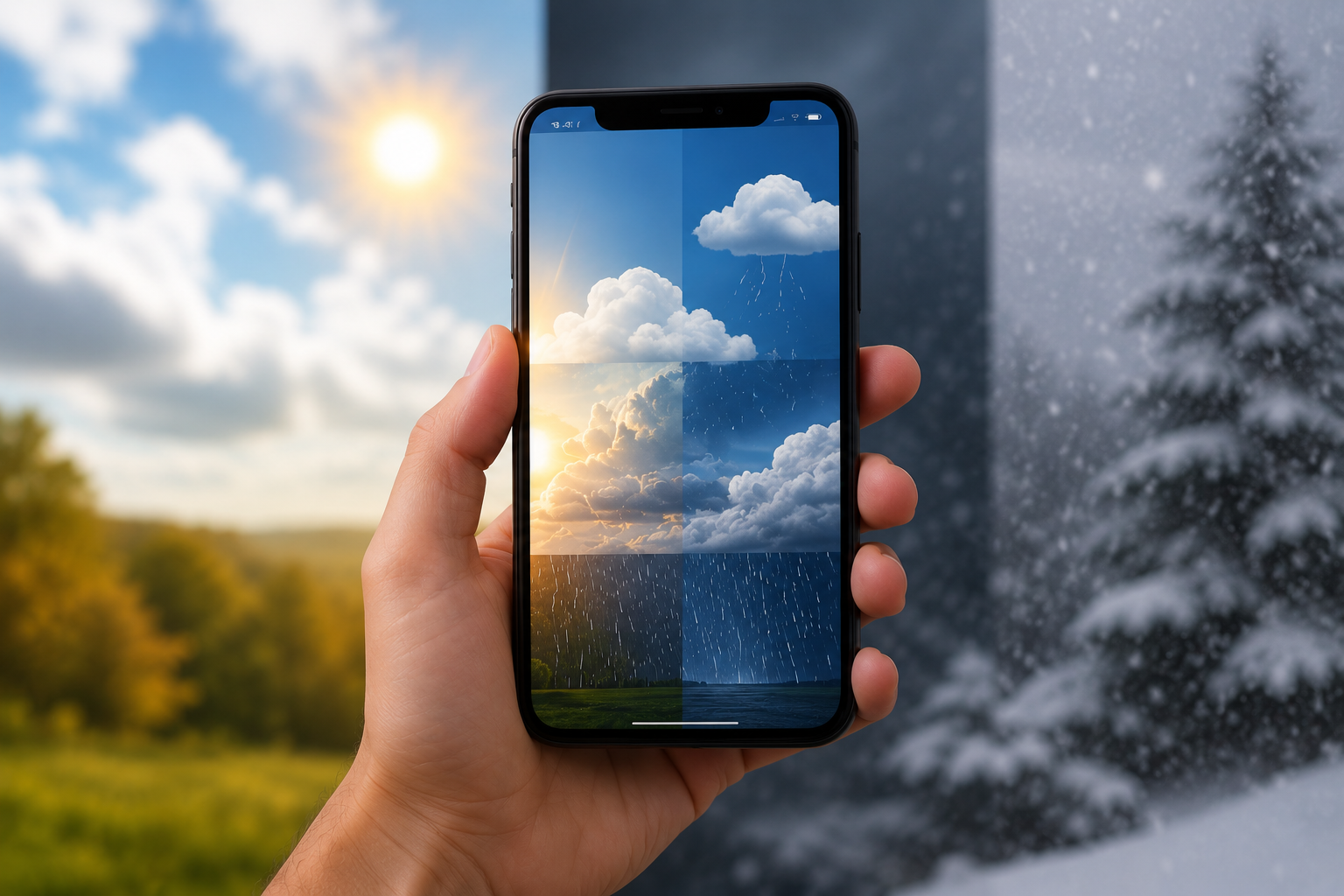
Weather apps have become essential tools in our daily lives, helping us plan activities, dress appropriately, and stay safe during severe weather conditions.
Gone are the days when we relied solely on television broadcasts or radio announcements to know if we needed an umbrella. Modern meteorology applications combine cutting-edge technology, satellite data, and artificial intelligence to deliver hyper-accurate forecasts right to our smartphones. These powerful tools have transformed how we interact with weather information, making it accessible, personalized, and incredibly detailed.
Anúncios
Whether you’re a farmer planning your harvest, a commuter deciding on your route, or simply someone who wants to know if the weekend will be sunny, meteorology apps provide invaluable insights. Let’s explore everything you need to know about these digital weather companions and how they’re revolutionizing our relationship with the elements. ⛅
Why Weather Apps Have Become Indispensable
The popularity of meteorology applications isn’t just a trend—it’s a reflection of our increasing need for accurate, real-time information. Climate patterns have become more unpredictable, making reliable weather forecasts more crucial than ever before.
Anúncios
These apps serve diverse audiences with varying needs. Outdoor enthusiasts rely on them to plan hiking trips and camping adventures. Pilots and maritime professionals use specialized weather apps for safety-critical decisions. Even casual users benefit from knowing whether to bring a jacket or apply extra sunscreen.
The convenience factor cannot be overstated. With a simple glance at your phone, you can access hourly forecasts, severe weather alerts, radar imagery, and long-range predictions. This immediate access to meteorological data empowers better decision-making throughout your day.


Core Features That Define Quality Weather Applications 📱
Not all weather apps are created equal. The best applications share several key characteristics that set them apart from basic offerings. Understanding these features helps you choose the right app for your specific needs.
Real-Time Weather Updates and Notifications
Top-tier meteorology apps provide minute-by-minute updates, especially during rapidly changing weather conditions. Push notifications alert users to severe weather warnings, including thunderstorms, tornadoes, hurricanes, and flash floods. This real-time communication can be life-saving during emergencies.
Many applications now offer hyper-local forecasts, pinpointing conditions for your exact location rather than just your city. This precision makes a significant difference, especially in regions with microclimates or varied terrain.
Interactive Radar and Satellite Imagery
Visual representations of weather systems help users understand what’s happening in the atmosphere. Interactive radar maps allow you to track storm movements, precipitation intensity, and cloud formations. Some advanced apps even offer future radar projections, showing where storms are likely to move in the coming hours.
Satellite imagery provides a broader perspective, revealing weather patterns across entire regions or continents. This feature is particularly valuable for travelers and those planning outdoor events days in advance.
Detailed Weather Parameters
Beyond basic temperature readings, comprehensive weather apps display numerous atmospheric conditions including:
- Humidity levels and dew point measurements
- Wind speed and direction with gust information
- Barometric pressure trends
- UV index for sun exposure planning
- Air quality and pollution indices
- Visibility distance for driving safety
- Sunrise and sunset times
- Moon phases for astronomy enthusiasts
These detailed metrics cater to specialized users while remaining accessible to casual observers. The presentation of this data through intuitive interfaces makes complex meteorological information easy to understand.
How Weather Apps Generate Their Predictions 🌐
Understanding the science behind weather apps enhances appreciation for their capabilities. These applications don’t simply guess—they synthesize massive amounts of data from multiple sources to produce forecasts.
Weather prediction begins with data collection from thousands of observation points worldwide. Ground-based weather stations, weather balloons, ocean buoys, aircraft sensors, and satellites continuously monitor atmospheric conditions. This raw data feeds into sophisticated computer models that simulate atmospheric physics.
Multiple meteorological models run simultaneously, each using slightly different algorithms and assumptions. Weather apps aggregate predictions from various models, including the European Centre for Medium-Range Weather Forecasts (ECMWF), the Global Forecast System (GFS), and regional models. By comparing these different projections, apps can identify consensus patterns and highlight areas of uncertainty.
The Role of Artificial Intelligence
Modern meteorology applications increasingly incorporate machine learning algorithms to improve accuracy. AI systems analyze historical weather patterns, learn from prediction errors, and identify subtle correlations that traditional models might miss.
These intelligent systems can personalize forecasts based on your location history and behavior patterns. They might learn that you’re particularly interested in precipitation forecasts during your morning commute and prioritize that information accordingly.
Choosing the Right Weather App for Your Needs ☀️
The app marketplace offers dozens of weather applications, each with distinct strengths and specializations. Selecting the best option depends on your specific requirements and preferences.
For general users seeking reliable forecasts with clean interfaces, mainstream applications provide excellent all-around performance. These apps balance accuracy, usability, and comprehensive features without overwhelming casual users.
Outdoor enthusiasts often prefer apps with specialized features like mountain weather forecasts, marine conditions, and trail-specific predictions. These applications understand the unique needs of hikers, climbers, sailors, and adventure seekers.

Professional and Specialized Applications
Certain professions require weather apps with advanced capabilities. Pilots need apps with METARs, TAFs, and aviation-specific forecasts. Farmers benefit from applications that track growing degree days, frost probability, and long-range seasonal outlooks.
Photographers and astronomy enthusiasts seek apps that predict cloud cover, visibility, and atmospheric conditions optimal for their pursuits. Even wedding planners and event coordinators now use specialized weather apps designed for their specific planning needs.
Privacy Considerations and Data Usage 🔒
Weather apps require location access to provide accurate forecasts, raising important privacy considerations. Understanding how apps collect, store, and use your data helps you make informed choices about permissions and settings.
Most reputable meteorology applications clearly outline their data practices in privacy policies. Look for apps that offer granular permission controls, allowing you to limit location tracking to “while using the app” rather than continuous background access.
Some weather apps monetize through advertising and may share anonymized user data with partners. Premium subscription options typically reduce or eliminate ads while offering enhanced features. Consider whether the privacy trade-offs align with your comfort level.
Maximizing Battery Life While Using Weather Apps 🔋
Weather applications can significantly impact smartphone battery life, especially when constantly updating location and refreshing data. Implementing smart strategies helps you stay informed without draining your device.
Adjust refresh intervals to balance timeliness with efficiency. Unless you’re monitoring rapidly changing severe weather, hourly updates often suffice. Disable background app refresh for weather apps when you don’t need constant updates.
Location settings dramatically affect battery consumption. Consider using manual location entry for your primary locations rather than continuous GPS tracking. Many apps allow you to save favorite locations and check forecasts without enabling precise location services.
The Future of Weather Forecasting Technology 🚀
Meteorology apps continue evolving rapidly, incorporating emerging technologies that promise even greater accuracy and utility. Understanding these trends reveals where weather forecasting is headed.
Crowdsourced weather data represents an exciting frontier. Some applications now allow users to report current conditions from their locations, creating dense observation networks that supplement traditional sensors. This community-contributed data helps apps verify forecasts and identify hyperlocal variations.
Augmented reality integration is beginning to appear in weather apps. Point your phone’s camera at the sky, and AR overlays can display forecasts, cloud identification, and weather system movements superimposed on your actual view.
Climate Change Adaptation Features
As climate patterns shift, weather apps are incorporating longer-term climate information alongside traditional forecasts. Users can now access historical comparisons, trend analyses, and climate projections to understand how their local weather is changing over time.
Heat stress indices, wildfire risk assessments, and flood probability tools reflect growing awareness of climate-related hazards. These features help individuals and communities prepare for increasingly common extreme weather events.
Making Weather Apps Work for Your Lifestyle 🌤️
Maximizing the value of your meteorology app requires some personalization and routine integration. These practical tips enhance your weather awareness and planning capabilities.
Set up multiple saved locations for places you care about—your home, workplace, vacation destinations, and where loved ones live. This allows quick forecast checks without searching repeatedly. Customize notification settings to receive alerts relevant to your concerns while avoiding unnecessary interruptions.
Develop the habit of checking weekly forecasts early in the week to inform planning decisions. Many people only check weather when making immediate decisions, missing opportunities for better preparation. A few minutes reviewing extended forecasts can significantly improve your week.
Explore all features your chosen app offers. Many users never discover valuable tools like historical weather data, almanac information, or specialty forecasts because they stick to the basic temperature display. Investing time to learn your app’s capabilities pays dividends.
Understanding Forecast Accuracy and Limitations ⚠️
Weather forecasting remains an imperfect science, despite tremendous technological advances. Recognizing the inherent limitations helps set realistic expectations and interpret predictions appropriately.
Forecast accuracy decreases with time. Today’s forecast is typically highly accurate, tomorrow’s quite reliable, but predictions beyond five to seven days become increasingly uncertain. Weather is a chaotic system where small measurement errors or model assumptions compound over time.
Probabilistic forecasts communicate uncertainty more honestly than definitive predictions. When an app shows 40% chance of rain, it means there’s significant uncertainty—conditions might remain dry or could bring precipitation. Understanding probability helps you make risk-appropriate decisions.
Microclimatic variations mean conditions at your precise location may differ from area forecasts. Elevation changes, proximity to water bodies, urban heat islands, and terrain features all create local weather variations. Use forecasts as guides while remaining observant of actual conditions.
Weather Apps as Educational Tools 📚
Beyond practical forecasting, meteorology applications serve as excellent educational resources for anyone curious about atmospheric science. Many apps include explanatory content that transforms weather checking into learning opportunities.
Detailed parameter explanations help users understand what dew point, barometric pressure, and other metrics actually mean. Some apps offer weather tutorials, storm tracking guides, and cloud identification resources that deepen meteorological literacy.
For parents and educators, weather apps provide hands-on science learning opportunities. Children can track storms, observe how forecasts change, and connect classroom lessons about water cycles and atmospheric physics to real-world observations.
Global Weather Access and International Travel 🌍
Quality meteorology apps excel at providing weather information anywhere in the world, making them invaluable travel companions. Before visiting unfamiliar destinations, checking typical weather patterns helps you pack appropriately and set realistic expectations.
Most comprehensive weather apps display forecasts in multiple units—Celsius or Fahrenheit, kilometers or miles per hour—accommodating international travelers. Time zone awareness ensures you interpret forecasts correctly when crossing regions.
Some applications offer travel-specific features like destination weather comparisons, packing recommendations based on forecasted conditions, and alerts for weather-related travel disruptions. These tools transform weather apps from simple forecasting tools into complete travel planning assistants.
Staying Safe During Severe Weather Events 🌪️
Perhaps the most critical function of weather applications is their role in severe weather safety. Timely warnings and accurate tracking can save lives when dangerous conditions develop.
Enable emergency weather alerts for your location and any areas where family members reside. These notifications bypass normal phone settings to ensure you receive critical warnings even in silent mode. Familiarize yourself with different alert types—watches versus warnings—to respond appropriately.
During active severe weather, use radar features to monitor storm positions and movements. Understanding whether threatening weather is approaching or moving away helps you make informed shelter decisions. Many apps now include lightning strike data, crucial information for outdoor safety.
Develop emergency plans that incorporate weather app information. Know how to quickly access offline forecast data if internet connectivity fails during storms. Some advanced users screenshot critical forecast information during severe weather events as backup references.
The Community Aspect of Modern Weather Apps 🤝
Weather has always been a common conversation topic, and modern apps are building social features around this shared interest. Community elements transform solitary forecast checking into collaborative weather observation.
User-submitted weather reports, photos of current conditions, and storm damage documentation create rich, real-time information networks. These crowdsourced observations help verify automated forecasts and provide ground truth that sensors might miss.
Some weather enthusiast communities form around specific applications, sharing forecast discussions, storm chasing information, and meteorological insights. These communities foster deeper weather understanding and connect people with shared atmospheric interests.
Weather apps have fundamentally changed our relationship with the atmosphere around us. What once required specialized equipment and expertise is now accessible to anyone with a smartphone. As these applications continue evolving, incorporating new technologies and data sources, they’ll become even more accurate, personalized, and indispensable. Whether you’re planning a picnic, preparing for a storm, or simply curious about atmospheric conditions, a quality meteorology app puts the power of professional forecasting literally at your fingertips. 🌈
