
Anúncios
Modern vehicle diagnostics have evolved from complex garage equipment to portable smartphone applications, revolutionizing how drivers maintain and troubleshoot their cars.
The automotive scanner application represents a significant technological leap that puts professional-grade diagnostic capabilities directly into the hands of everyday vehicle owners. Gone are the days when understanding your car’s health required expensive visits to mechanics or specialized training in automotive systems.
Anúncios
These innovative mobile solutions transform your smartphone into a comprehensive diagnostic tool, providing real-time insights into engine performance, fuel efficiency, emission levels, and potential mechanical issues. Whether you’re a car enthusiast, a professional mechanic, or simply someone who wants better control over vehicle maintenance costs, automotive scanner apps offer unprecedented access to your car’s internal systems. 🚗
Understanding the Technology Behind Automotive Scanner Apps
At the core of every automotive scanner application lies the OBD-II (On-Board Diagnostics) protocol, a standardized system mandated in vehicles manufactured after 1996 in the United States and 2001 in Europe. This universal diagnostic interface allows external devices to communicate with your vehicle’s onboard computer, retrieving valuable data about engine performance and system health.
Anúncios
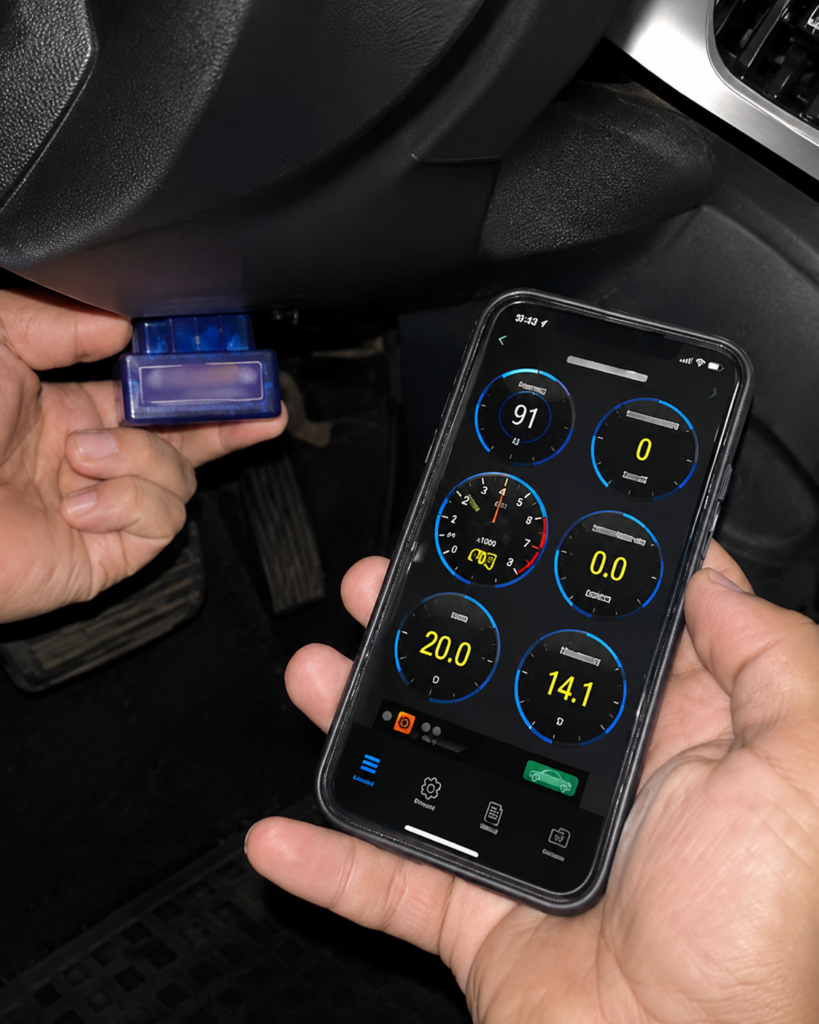
The connection between your smartphone and vehicle occurs through a small Bluetooth or WiFi-enabled adapter that plugs into your car’s OBD-II port, typically located beneath the dashboard near the steering column. Once connected, the scanner app establishes communication with various Electronic Control Units (ECUs) scattered throughout your vehicle, each monitoring specific systems like transmission, brakes, and emissions.
These applications decode complex diagnostic trouble codes (DTCs) that would otherwise appear as cryptic alphanumeric sequences. Instead of seeing “P0420,” for example, the app translates this to “Catalyst System Efficiency Below Threshold,” explaining what the problem means and often suggesting potential solutions. This translation capability alone saves countless hours and eliminates the confusion that typically accompanies automotive diagnostics.


Essential Features That Define Quality Scanner Applications
The best automotive scanner apps distinguish themselves through comprehensive feature sets that extend far beyond basic code reading. Real-time data monitoring stands as one of the most valuable capabilities, allowing users to observe live parameters such as engine RPM, coolant temperature, oxygen sensor readings, and throttle position while driving or idling.
Advanced applications provide graphing capabilities that visualize data trends over time, making it easier to identify intermittent problems or performance degradation. For instance, watching your oxygen sensor readings fluctuate during acceleration can reveal fuel mixture issues that might not trigger a check engine light but still impact performance and efficiency.
Freeze frame data represents another critical feature, capturing and storing sensor readings at the exact moment a diagnostic code was triggered. This snapshot helps identify the driving conditions and system states that led to a particular fault, significantly narrowing down potential causes and simplifying troubleshooting processes.
Diagnostic Code Libraries and Descriptions 📚
Comprehensive databases containing thousands of manufacturer-specific and generic OBD-II codes form the backbone of effective scanner applications. Premium apps regularly update these libraries to include codes for newer vehicle models and emerging technologies like hybrid systems and advanced driver-assistance features.
Beyond simply listing codes, quality applications provide detailed descriptions, common causes, and recommended repair procedures. Some even include severity ratings that help prioritize which issues require immediate attention versus those that can wait for routine maintenance scheduling.
Performance Monitoring and Driving Analytics
Modern automotive scanner apps have evolved beyond diagnostic tools into comprehensive performance monitoring systems. Trip logging features record detailed journey information including distance, fuel consumption, average speed, and driving duration. This data proves invaluable for tracking vehicle efficiency, monitoring teen drivers, or maintaining detailed records for business mileage deductions.
Acceleration testing features transform your smartphone into a portable performance meter, measuring 0-60 times, quarter-mile performance, and G-forces during cornering. While primarily appealing to enthusiasts, these metrics can also reveal performance degradation that might indicate developing mechanical problems requiring attention.
Fuel economy tracking stands out as particularly practical for budget-conscious drivers. By monitoring real-time fuel consumption and calculating average efficiency across multiple trips, these apps help identify driving habits or vehicle conditions that unnecessarily increase fuel costs. Some applications even provide eco-driving tips based on your specific driving patterns.
Customizable Dashboard Displays
Flexibility in data presentation allows users to create personalized dashboard layouts featuring the specific parameters most relevant to their needs. A performance enthusiast might prioritize turbo boost pressure and intake air temperature, while an eco-conscious driver focuses on instant fuel economy and engine load percentages.
Many applications support multiple custom configurations that can be switched depending on the situation—one layout for daily commuting, another for highway trips, and perhaps a third for spirited weekend drives. This adaptability ensures quick access to relevant information without navigating through multiple menus while driving.
Maintenance Tracking and Service Reminders ⚙️
Proactive vehicle maintenance extends lifespan and prevents costly repairs, making integrated service reminder systems particularly valuable. Quality scanner apps allow users to configure custom maintenance schedules based on mileage intervals, time periods, or both, ensuring nothing gets overlooked in the hustle of daily life.
Oil change reminders, tire rotation schedules, brake inspection intervals, and transmission service notifications keep your vehicle running optimally. Some applications automatically calculate remaining service intervals based on real-time mileage tracking, providing accurate countdowns without requiring manual updates.
Maintenance history logs create comprehensive service records documenting every oil change, repair, and inspection. This detailed history proves invaluable when diagnosing recurring problems, verifying warranty coverage, or demonstrating proper maintenance when selling your vehicle. Digital receipts and photos can often be attached to specific service entries for complete documentation.
Troubleshooting Common Vehicle Problems
The check engine light—that ominous illuminated icon that strikes fear into drivers’ hearts—becomes significantly less intimidating with an automotive scanner app. Instead of immediately driving to a mechanic and paying diagnostic fees, you can instantly retrieve the specific code triggering the warning and research whether it represents a serious problem requiring immediate attention or a minor issue that can wait.
Many codes indicate problems with sensors rather than actual system failures. A malfunctioning oxygen sensor might trigger a code and illuminate the check engine light, but the engine itself runs perfectly fine. Understanding this distinction prevents unnecessary panic and allows informed decision-making about repair urgency and priorities.
Emission System Monitoring
Pre-inspection testing represents one of the most practical applications for scanner apps. Many regions require periodic emission inspections, and certain readiness monitors must complete their testing cycles before a vehicle can pass. Scanner apps display the status of these monitors, indicating whether your car is ready for testing or needs additional driving under specific conditions to complete all required checks.
This capability prevents wasted trips to inspection stations and the frustration of failing simply because monitors hadn’t completed their cycles after recent battery disconnection or code clearing. The apps typically provide guidance on drive cycles required to set incomplete monitors.
Choosing the Right Scanner Hardware Adapter
The physical adapter connecting your smartphone to the vehicle’s OBD-II port significantly impacts functionality and user experience. Bluetooth adapters offer wireless convenience and work with both iOS and Android devices, though connection stability sometimes varies depending on adapter quality and smartphone Bluetooth capabilities.
WiFi adapters typically provide faster data transmission and more stable connections, particularly beneficial when monitoring multiple parameters simultaneously or recording high-speed data logging. However, iOS device compatibility often favors WiFi adapters due to Apple’s restrictions on third-party Bluetooth Low Energy implementations for OBD-II communication.
Build quality matters considerably—cheap adapters from unknown manufacturers may work initially but often fail prematurely or provide inaccurate readings. Established brands offering firmware updates and customer support represent better long-term investments, even at slightly higher price points. Reading user reviews specifically mentioning your vehicle’s make and model helps identify compatibility issues before purchasing.

Protocol Compatibility Considerations 🔌
While OBD-II standards ensure basic compatibility across vehicles, different manufacturers implement various communication protocols. Quality adapters support multiple protocols including ISO 9141-2, ISO 14230-4 (KWP2000), ISO 15765-4 (CAN), SAE J1850 PWM, and SAE J1850 VPW, ensuring broad vehicle compatibility.
Most modern vehicles manufactured after 2008 use the CAN protocol exclusively, but older models might require different protocols. Verifying your vehicle’s specific protocol requirements before purchasing an adapter prevents compatibility disappointments and unnecessary returns.
Privacy and Data Security Considerations
Automotive scanner applications access detailed vehicle information and potentially track location data through GPS integration. Understanding how developers handle this sensitive information becomes increasingly important in our privacy-conscious era. Reputable applications clearly disclose data collection practices, storage locations, and whether information is shared with third parties.
Some applications require account creation and cloud synchronization for advanced features, uploading vehicle data to remote servers. While this enables convenient access across multiple devices and provides backup protection, it also creates potential privacy vulnerabilities if servers are compromised or data is monetized without transparent user consent.
Reading privacy policies and user reviews specifically mentioning data handling practices helps identify applications that prioritize user privacy. Features like offline functionality, local data storage options, and minimal permission requests often indicate more privacy-focused development approaches.
Cost Considerations and Value Analysis 💰
Entry-level automotive scanner apps often provide basic functionality free of charge, including code reading, simple data monitoring, and freeze frame retrieval. These free versions typically prove sufficient for occasional users who primarily want check engine light diagnosis and basic vehicle monitoring without advanced features.
Premium versions unlocked through one-time purchases or subscription models offer expanded capabilities like manufacturer-specific codes, advanced graphing, customizable dashboards, and enhanced maintenance tracking. Evaluating whether these additional features justify the cost depends largely on how frequently you’ll use them and your specific diagnostic needs.
Compared to single-purpose dedicated scan tools costing hundreds or thousands of dollars, smartphone-based solutions represent remarkable value. Even premium app subscriptions combined with quality adapter hardware typically total less than one professional diagnostic session at a repair shop, quickly paying for themselves through reduced mechanic visits.
Educational Value for Vehicle Enthusiasts 🎓
Beyond practical diagnostic capabilities, automotive scanner applications serve as powerful educational tools for those interested in understanding how modern vehicles function. Observing real-time data as you drive provides intuitive lessons about engine management, fuel injection timing, transmission shift points, and emission control strategies.
The correlation between throttle input and manifold absolute pressure, the relationship between coolant temperature and fuel injection duration, or how oxygen sensor feedback affects fuel mixture adjustments—these concepts become tangible when visualized through live data monitoring rather than remaining abstract theoretical knowledge.
This hands-on learning empowers vehicle owners to have more informed conversations with mechanics, better understand repair quotes, and make educated decisions about maintenance priorities. The knowledge gained often sparks deeper interest in automotive technology, potentially leading to DIY repair confidence for simpler maintenance tasks.
Limitations and Realistic Expectations
While automotive scanner apps provide impressive capabilities, understanding their limitations prevents disappointment and ensures appropriate use. These applications excel at retrieving standardized OBD-II data but may struggle with manufacturer-specific systems like airbags, ABS modules, or advanced features unique to particular brands that require proprietary software.
The interpretation assistance provided by scanner apps, while helpful, cannot replace experienced mechanical diagnosis for complex problems. A code indicating a misfire tells you which cylinder is affected but doesn’t definitively identify whether the cause is a bad spark plug, failing ignition coil, fuel injector problem, or compression issue requiring further investigation.
Connection reliability sometimes varies depending on vehicle compatibility, adapter quality, and environmental factors. Older vehicles near the 1996 cutoff may have less comprehensive OBD-II implementation, limiting available data compared to modern vehicles with dozens of sensors and multiple control modules.
The Future of Automotive Diagnostic Technology 🚀
Emerging technologies promise even more sophisticated diagnostic capabilities in future scanner applications. Artificial intelligence and machine learning integration could provide predictive maintenance alerts based on subtle data patterns invisible to human analysis, warning of impending failures before they occur.
Augmented reality features might overlay diagnostic information directly onto live camera views of engine compartments, highlighting specific components referenced in trouble codes or maintenance procedures. This visual guidance would dramatically simplify repairs for less experienced individuals attempting DIY maintenance.
Cloud-based diagnostic databases continuously learning from millions of vehicles worldwide could offer increasingly accurate troubleshooting suggestions based on collective experience rather than generic repair manuals. Community-sourced repair experiences tied to specific code combinations on particular vehicle models would refine recommendations over time.
Making the Most of Your Scanner App Experience
Regular baseline monitoring when your vehicle runs properly establishes normal parameter ranges for future comparison. Recording typical coolant temperatures, oxygen sensor voltages, and fuel trim percentages during healthy operation provides reference points for identifying abnormal readings when problems develop.
Creating custom dashboards for different monitoring purposes maximizes efficiency. A highway efficiency display might emphasize instant fuel economy, throttle position, and engine load, while a performance layout prioritizes timing advance, air-fuel ratio, and intake manifold pressure for spirited driving sessions.
Exploring all available features even when not immediately needed familiarizes you with the application’s capabilities before emergency situations arise. Understanding how to access freeze frame data, clear codes properly, or export maintenance logs prevents fumbling through unfamiliar interfaces when time-sensitive problems demand quick action.
Taking advantage of community forums and user groups associated with popular scanner applications provides valuable insights from experienced users. These communities often share custom dashboard configurations, troubleshooting tips for specific vehicle models, and recommendations for compatible hardware adapters tested across diverse situations.
Automotive scanner applications represent one of the most practical intersections of smartphone technology and vehicle ownership, democratizing diagnostic capabilities once reserved for professional mechanics. Whether you’re troubleshooting a check engine light, monitoring performance parameters, or simply learning more about your vehicle’s operation, these powerful tools provide unprecedented insight into automotive systems. The combination of accessibility, affordability, and comprehensive functionality makes scanner apps essential companions for modern drivers who value understanding and maintaining their vehicles effectively. 🔧
