
Anúncios
Traditions form the bridge between past and present, yet each generation faces the challenge of preserving authentic meaning while adapting customs to contemporary contexts. 🌍
The transmission of cultural heritage across generations represents one of humanity’s most delicate endeavors. As societies evolve at unprecedented speeds, the gap between original contexts and modern interpretations widens, creating a phenomenon known as context loss. This gradual erosion of the circumstances, meanings, and purposes that originally shaped our traditions threatens to reduce rich cultural practices to hollow rituals performed without understanding or conviction.
Anúncios
Understanding how to preserve the essence of traditions while navigating inevitable context loss has become increasingly critical in our globalized, digitized world. The challenge extends beyond simple documentation—it requires thoughtful consideration of what makes traditions meaningful, how context shapes interpretation, and what strategies can maintain relevance without sacrificing authenticity.
The Anatomy of Context Loss in Cultural Transmission 🔍
Context loss occurs gradually, often imperceptibly, as the environmental, social, and practical circumstances surrounding a tradition change. When grandparents share stories with grandchildren, certain assumed knowledge—the smell of particular foods, the rhythm of seasonal work, the social dynamics of close-knit communities—remains unspoken because it was simply “understood” in their time.
Anúncios
This phenomenon manifests in several distinct layers. The physical context includes the tangible environment where traditions developed: specific landscapes, architectural spaces, tools, and materials. When traditions move from rural villages to urban apartments, from open communal spaces to private homes, something fundamental shifts even if the surface practices remain similar.
The social context encompasses the network of relationships, hierarchies, and community structures that gave traditions their original meaning. A harvest festival celebrated in a community where everyone participated in agricultural work carries different weight than the same festival observed by urban office workers who purchase food from supermarkets.
The temporal context reflects the historical circumstances, challenges, and worldviews that shaped why certain traditions emerged. Practices developed during times of scarcity, war, or religious persecution carry meanings that may be incomprehensible to those living in prosperity, peace, or religious freedom.
Why Context Matters More Than We Realize
Without context, traditions risk becoming what anthropologists call “empty signifiers”—symbols that maintain their form but lose their substance. Consider traditional wedding customs: many couples incorporate rituals from their cultural heritage without understanding their original purposes, whether they symbolized fertility, family alliance, property transfer, or religious covenant.
This context deficit creates several problematic outcomes. First, it enables superficial appropriation, where traditions are adopted as aesthetic choices divorced from their cultural significance. Second, it makes traditions vulnerable to abandonment, as younger generations see them as arbitrary rules rather than meaningful practices. Third, it prevents adaptation, because without understanding the core purpose, communities cannot distinguish essential elements from contextual details.
The Digital Paradox: Documentation Without Understanding 📱
Modern technology offers unprecedented opportunities for preserving traditions through video documentation, digital archives, and global sharing platforms. Yet this same technology can accelerate context loss by reducing rich, multisensory experiences to flat, consumable content.
When a traditional craft technique is taught through a YouTube tutorial, students learn the mechanical steps but miss the apprenticeship relationship, the stories shared during long hours of practice, the community validation of mastery, and the economic ecosystem that sustained the craft. The documentation is comprehensive yet somehow incomplete.
Social media platforms create additional distortions by incentivizing the most visually striking or emotionally resonant aspects of traditions while neglecting the mundane, subtle, or philosophically complex elements. A colorful festival becomes Instagram-worthy content, but the weeks of preparation, the religious devotions, and the community negotiations that made it meaningful remain invisible.
Rethinking Digital Preservation Strategies
Effective digital preservation requires intentional context documentation. This means recording not just what people do, but why they do it, what it means to them, what has changed over time, and what challenges they face in continuation. Video oral histories, annotated demonstrations, and comparative timelines all serve this deeper documentation purpose.
Some communities have pioneered innovative approaches, creating multimedia repositories that link traditional practices with their historical contexts, contemporary challenges, and evolving interpretations. These living archives acknowledge that traditions aren’t static museum pieces but dynamic practices that maintain relevance through thoughtful evolution.
Generational Translation: The Art of Meaningful Adaptation 🌱
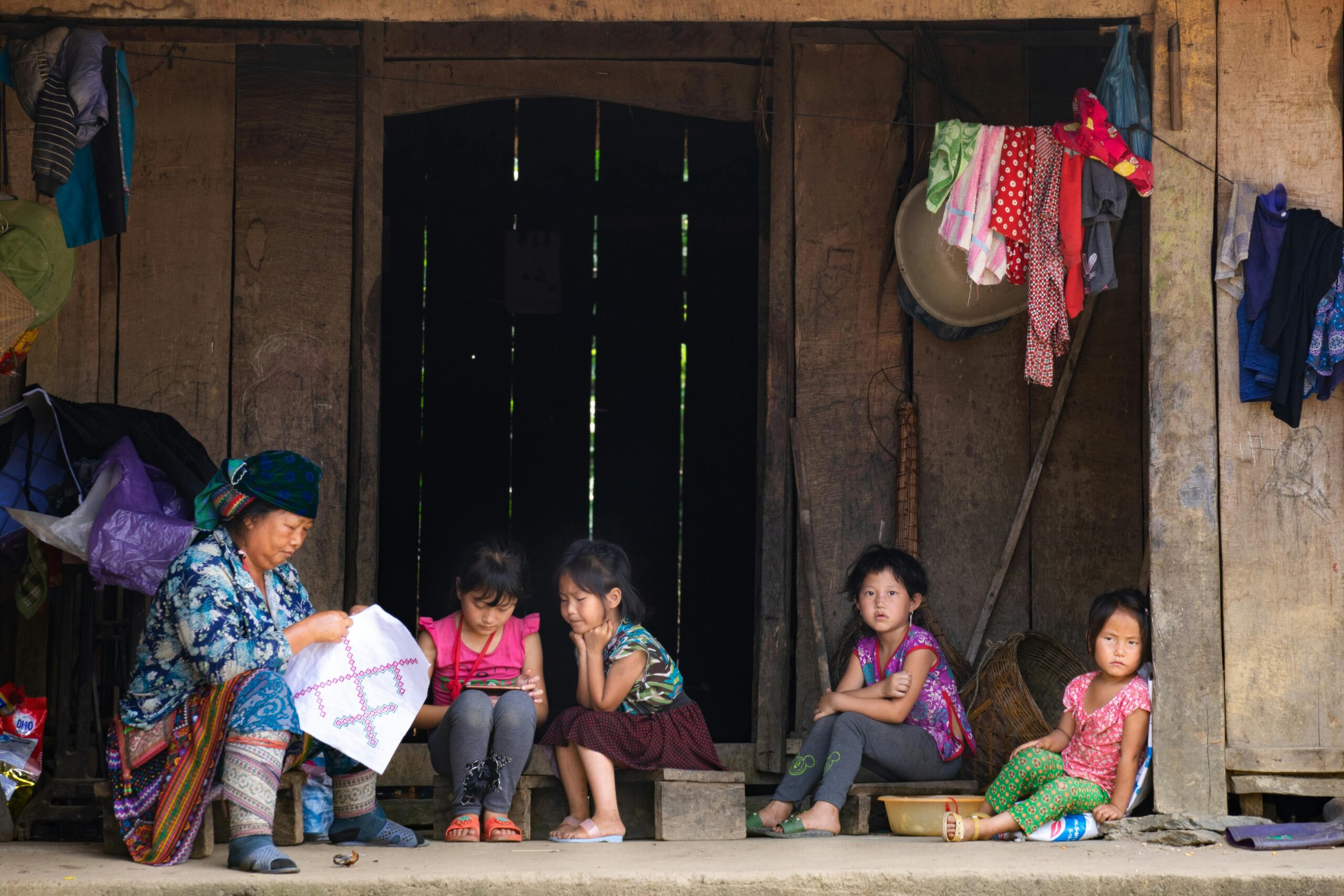
The most successful tradition transfers occur when elder generations act as translators, explicitly connecting historical contexts with contemporary circumstances. This requires moving beyond “because we’ve always done it this way” to explanations that reveal underlying principles, values, and purposes.
Consider food traditions: a grandmother teaching her granddaughter to make traditional dishes can approach it as rote recipe memorization, or she can explain why certain ingredients were used (availability, preservation, health beliefs), how preparation methods reflected pre-modern technology, and which elements are essential versus which can adapt to modern contexts.
This translation work demands significant emotional and intellectual labor. It requires elders to articulate knowledge they may hold implicitly, to remember contexts they take for granted, and to acknowledge changes they may find uncomfortable. It also requires younger generations to engage with genuine curiosity rather than obligation or nostalgia.
Creating Bridges Across Experience Gaps
When direct experience is impossible, creative bridging strategies become essential. Living history experiences, seasonal observations, community participation, and deliberate skill development can partially recreate contexts that no longer exist naturally in modern life.
Some families and communities intentionally create modified contexts—urban gardens to understand agricultural cycles, craft circles to recreate communal work experiences, seasonal celebrations that mark time differently than secular calendars. These aren’t perfect reproductions but rather conscious approximations that provide reference points for understanding traditional practices.
The Role of Storytelling in Context Preservation 📚
Narrative has always been humanity’s primary tool for transmitting context alongside content. Stories embed traditions within landscapes of meaning, connecting practices to personalities, historical events, moral lessons, and emotional experiences that make them memorable and significant.
Effective tradition-bearing stories don’t just describe what was done but immerse listeners in the world where it made sense. They convey the stakes involved, the relationships shaped, the problems solved, and the values expressed. A story about making quilts might reveal economic hardship, female community, creative expression, environmental adaptation, and family memory—layers of context that transform the activity from craft project to cultural practice.
The decline of intergenerational storytelling represents a critical vulnerability in tradition transfer. When families spend less time in open-ended conversation, when entertainment comes from screens rather than shared memory, when geographic mobility separates generations, the narrative context that makes traditions comprehensible disappears.
Revitalizing Narrative Transmission
Intentional storytelling practices can counter this trend. Family history projects, recorded interviews, story circles, and collaborative documentation initiatives all create opportunities for contextual knowledge transfer. The key is treating these not as occasional special events but as regular practices woven into family and community life.
Some communities have developed structured storytelling traditions specifically for context preservation—annual gatherings where elders share memories, mentorship programs pairing young people with tradition-bearers, or podcast projects documenting cultural knowledge. These initiatives recognize that narrative context requires active cultivation in modern environments.
Navigating the Authenticity Dilemma 🎭
Context loss inevitably raises questions about authenticity. When traditions are practiced in radically different contexts, are they still “authentic”? This question often generates anxiety and conflict within communities trying to preserve heritage while adapting to contemporary realities.
The authenticity dilemma becomes particularly acute around modifications: Can vegetarians observe traditions originally centered on animal sacrifice? Can traditions shaped by patriarchal structures be adapted for gender equality? Can religious practices be maintained by secularized descendants? Can colonized peoples reclaim traditions that have been interrupted, suppressed, or hybridized?
Productive responses to these questions typically reject both rigid fundamentalism (insisting on exact replication regardless of context) and casual relativism (claiming any interpretation is equally valid). Instead, they seek what might be called “principled adaptation”—changes guided by deep understanding of core purposes and values.
Distinguishing Core from Context
Principled adaptation requires discernment about what constitutes the essential meaning of a tradition versus what reflects its original context. This discernment develops through study, reflection, dialogue with tradition-bearers, and experimentation with adaptations.
A traditional practice might have essential elements (the values it expresses, the relationships it creates, the purposes it serves) and contextual elements (the specific materials used, the exact procedures followed, the social structures assumed). Understanding this distinction allows communities to adapt contextual elements while preserving essential meanings.
Community as Context: The Social Dimension of Preservation 👥
Many traditions exist not as individual practices but as community activities that create and reinforce social bonds. This social dimension represents both a vulnerability and an opportunity in tradition transfer. When communities disperse geographically, when social structures change dramatically, traditions lose their native ecosystem.
Religious communities facing this challenge often struggle with whether diaspora members in isolated locations should attempt community-dependent traditions individually, modify them for small groups, or reserve them for occasional gatherings. Each option involves trade-offs between accessibility and authenticity, individual practice and communal meaning.
Yet the community dimension also offers preservation advantages. When traditions are held collectively rather than individually, they become less vulnerable to single-point failures. If one family forgets, others remember. If one generation loses interest, another may revitalize. The distributed nature of communal traditions provides redundancy and resilience.
Building Contemporary Communities of Practice
Modern communities of practice don’t always look like traditional ones, but they can serve similar functions. Online communities, regional organizations, annual gatherings, and voluntary associations can create spaces where traditions find contemporary social contexts.
These new community forms require intentional design. They must balance accessibility with depth, accommodate diverse commitment levels, create belonging without coercion, and foster genuine relationships rather than transactional exchanges. When successful, they provide the social scaffolding that makes traditions meaningful rather than merely performative.
Educational Approaches That Preserve Context 🎓
Formal and informal education play crucial roles in tradition transfer, but conventional educational approaches often strip away context in favor of standardized content. A dance taught in a school gymnasium, divorced from its ceremonial purposes and community celebrations, becomes exercise rather than cultural practice.
Context-preserving education requires different pedagogical approaches. Immersive learning experiences, apprenticeship models, community-based education, and place-based curricula all offer alternatives to decontextualized instruction. These approaches recognize that traditions aren’t merely information to be transferred but ways of being that must be experienced within meaningful frameworks.
Indigenous education initiatives worldwide have pioneered approaches that maintain cultural context while engaging modern learners. These often involve elders as primary teachers, learning in culturally significant locations, integration with seasonal cycles, and connection to contemporary community needs rather than abstract academic requirements.
Looking Forward: Sustainability in Tradition Transfer 🔮
Sustainable tradition transfer requires realistic assessment of what’s possible in contemporary contexts. Not all traditions can or should be preserved identically. Some will evolve significantly, some will merge with new influences, some will be practiced occasionally rather than regularly, and some may be documented and remembered without active continuation.
This pragmatic approach isn’t defeatist but rather recognizes that cultural evolution is normal and inevitable. The goal isn’t to freeze traditions in amber but to ensure that changes occur through informed choice rather than passive loss, that core meanings survive even as forms adapt, and that future generations have access to their heritage in ways that remain meaningful.
Communities successfully navigating this challenge typically share several characteristics: they’ve invested in documentation and context preservation, they’ve created opportunities for immersive learning, they’ve developed translation bridges between generations and contexts, they’ve built contemporary communities of practice, and they’ve embraced principled adaptation rather than rigid replication.
The Path Forward Requires Collective Commitment
Preserving the past while navigating context loss isn’t work that any individual can accomplish alone. It requires coordinated effort across generations, institutional support from cultural organizations, educational initiatives that prioritize context, digital tools designed for depth rather than just documentation, and community structures that provide social space for traditions to remain meaningful.
Most importantly, it requires recognizing that tradition transfer is ongoing creative work, not passive inheritance. Each generation must actively engage with their heritage, understand its contexts, discern its core meanings, and make thoughtful decisions about adaptation. This engaged stewardship—rather than either rigid preservation or casual abandonment—offers the best hope for traditions that remain living rather than merely historical.
The journey of tradition transfer through context loss is challenging but not impossible. By combining thorough documentation, narrative richness, principled adaptation, community building, context-preserving education, and realistic sustainability planning, communities can maintain meaningful connections to their heritage even as circumstances change dramatically. The past need not be lost simply because it cannot be perfectly replicated—it can be translated, adapted, and honored in ways that preserve its essential gifts for future generations. 🌟
