Anúncios
Learning guitar has never been easier, thanks to modern mobile apps designed to guide beginners and advanced players alike through interactive lessons, real-time feedback, and personalized learning paths.
Guitar learning apps have revolutionized music education by making high-quality instruction accessible to anyone with a smartphone. Whether you’re picking up the instrument for the first time or looking to refine your skills, these digital tools offer structured courses that adapt to your pace and style.
Anúncios
The combination of video tutorials, chord libraries, song catalogs, and AI-powered feedback creates an immersive learning experience that rivals traditional in-person lessons. Let’s explore how these apps work, what features to look for, and how they can accelerate your journey to becoming a confident guitarist.
🎸 Why Choose a Guitar Learning App Over Traditional Lessons
Traditional guitar lessons certainly have their place, but mobile apps offer unique advantages that make them increasingly popular among learners of all ages. The flexibility to practice anytime, anywhere removes one of the biggest barriers to consistent practice.
Anúncios
Cost is another significant factor. While private lessons can range from $30 to $100 per hour, most guitar apps operate on affordable subscription models or even offer free versions with basic features. This makes quality instruction accessible to students who might not otherwise afford regular lessons.
Apps also eliminate scheduling conflicts. Your teacher is always available, whether you have 10 minutes during lunch or an hour before bed. This on-demand access encourages more frequent practice sessions, which is crucial for developing muscle memory and technical skills.
The privacy of learning at home also appeals to many beginners who feel self-conscious about making mistakes in front of an instructor. Apps create a judgment-free environment where you can repeat lessons as many times as needed without embarrassment.


🎯 Essential Features Every Quality Guitar App Should Have
Not all guitar learning apps are created equal. The best ones incorporate several key features that enhance the learning experience and keep students engaged over the long term.
Real-Time Audio Recognition Technology
Advanced apps use your device’s microphone to listen as you play, providing instant feedback on timing, accuracy, and chord transitions. This technology has improved dramatically in recent years, making digital instruction nearly as responsive as having a teacher beside you.
The app can detect whether you’re playing the correct notes, maintaining proper rhythm, and transitioning smoothly between chords. This immediate feedback loop helps you correct mistakes before they become ingrained habits.
Structured Learning Paths
Quality apps organize lessons into progressive curricula that build skills systematically. Beginners start with basic concepts like holding the guitar properly, tuning, and simple chords, then gradually advance to more complex techniques.
This structured approach prevents the overwhelm that often derails self-taught musicians who don’t know what to learn next. Each lesson unlocks logically after completing prerequisites, ensuring you have the necessary foundation before moving forward.
Extensive Song Library
Learning songs you actually enjoy is one of the most effective motivators for continued practice. The best apps offer catalogs with hundreds or thousands of popular songs across multiple genres, from classic rock to contemporary pop.
Many apps include simplified versions for beginners alongside more complex arrangements for advanced players. This allows you to play recognizable songs even in your first weeks of learning, providing a sense of accomplishment that keeps you motivated.
Video Tutorials and Visual Aids
High-quality video instruction showing proper hand positioning, finger placement, and strumming techniques is essential for visual learners. Multiple camera angles help you see exactly what you should be doing.
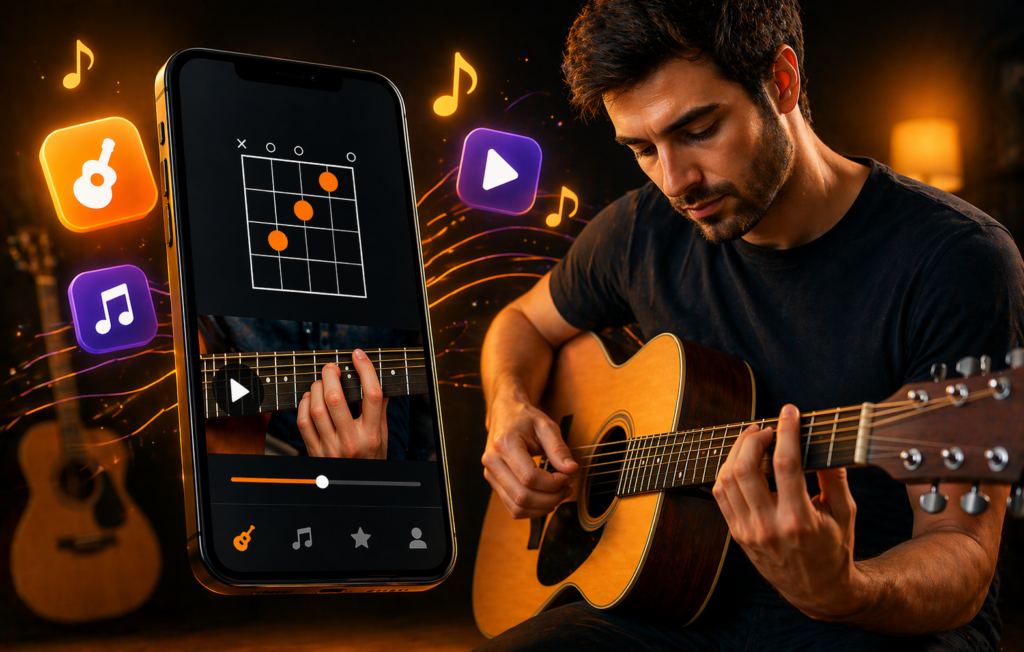
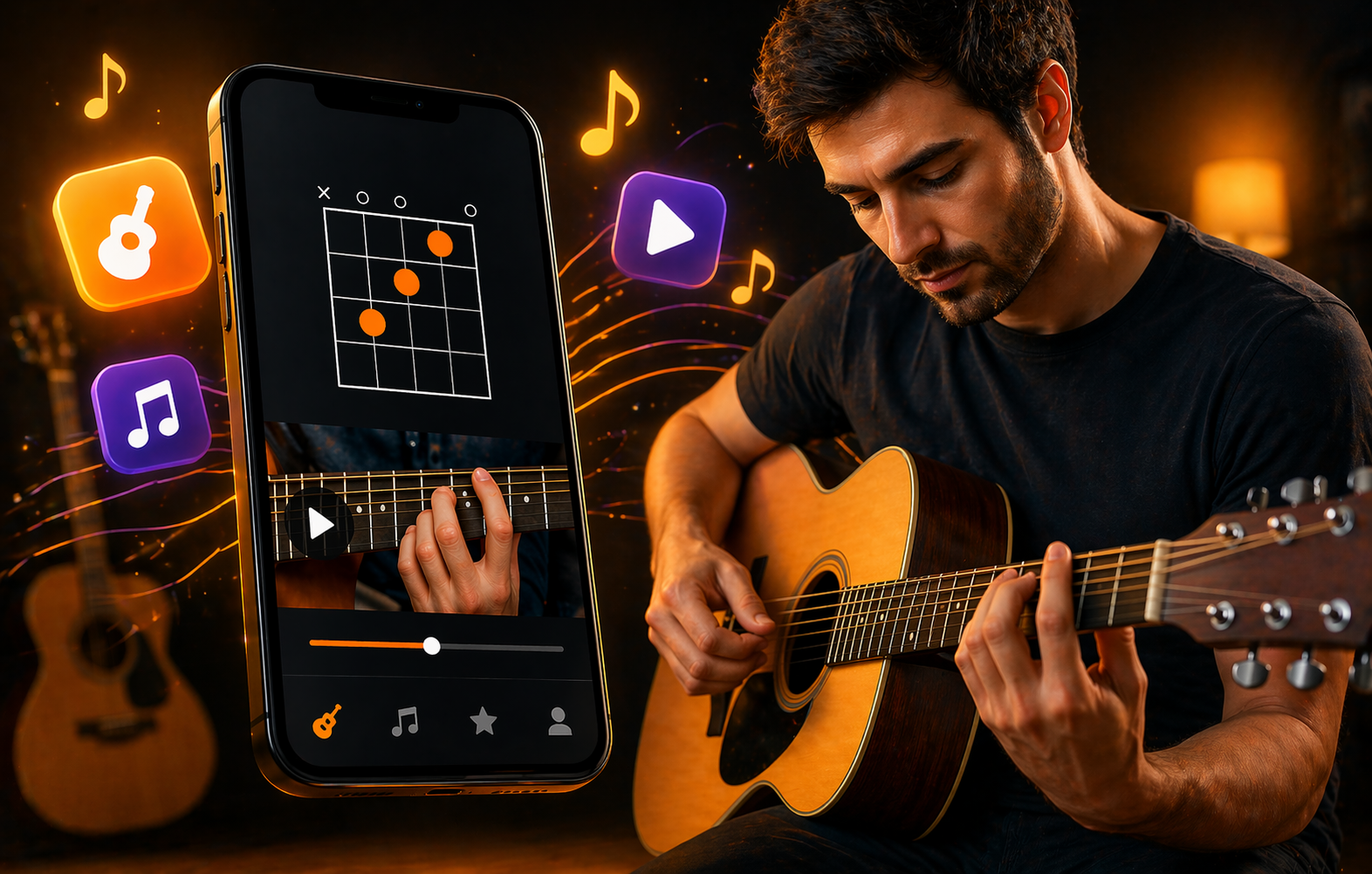
Interactive chord diagrams, tablature displays, and animated fretboards provide additional visual guidance that makes complex concepts easier to grasp than text descriptions alone.📱 Top Guitar Learning Apps Worth Downloading
The mobile app marketplace offers numerous options for aspiring guitarists. While individual needs vary, several apps consistently receive high ratings for their comprehensive features and effective teaching methods.
Simply Guitar: Perfect for Absolute Beginners
Simply Guitar stands out for its exceptionally user-friendly interface and gentle learning curve. The app guides complete beginners through their first chords and songs with clear instructions and patient pacing.
The audio recognition system provides encouraging feedback as you progress, and the song selection includes many familiar titles that beginners actually want to play. The subscription model unlocks full access to hundreds of lessons and songs.
Yousician: Comprehensive Gamified Learning
Yousician transforms guitar practice into an engaging game-like experience with points, levels, and challenges. This gamification approach particularly appeals to younger learners and anyone who responds well to achievement-based motivation.
The app covers guitar extensively but also offers lessons for bass, ukulele, piano, and singing, making it a versatile choice for multi-instrumental households. The curriculum is well-structured, taking students from absolute basics to advanced techniques.
Fender Play: Professional Quality Instruction
Backed by the legendary guitar manufacturer, Fender Play offers professionally produced video lessons taught by experienced instructors. The production quality is excellent, and the teaching methodology reflects decades of guitar education expertise.
The app organizes content by musical genre, allowing students to focus on the style they’re most passionate about—whether that’s blues, rock, country, or pop. This genre-based approach keeps learners engaged by teaching techniques within their preferred musical context.

Justin Guitar: Free Resource with Premium Options
Justin Sandercoe’s guitar lessons have helped millions of students worldwide through his website, and his app brings that same quality instruction to mobile devices. The core lessons are available free, with optional premium features for enhanced functionality.
Justin’s teaching style is warm and encouraging, making complex concepts accessible without talking down to students. The lesson progression is logical and time-tested, refined over years of teaching thousands of students.
🎼 How to Maximize Your Learning with Guitar Apps
Simply downloading an app won’t magically transform you into a guitarist—consistent, focused practice is essential. However, you can optimize your learning by following some proven strategies.
Establish a Regular Practice Schedule
Consistency matters more than duration. Practicing 15 minutes daily produces better results than cramming an hour once a week. The repetition builds muscle memory and keeps concepts fresh in your mind.
Schedule your practice sessions at the same time each day to build a habit. Morning sessions work well for some people, while others prefer evening practice as a relaxing wind-down activity.
Focus on Quality Over Quantity
Rushing through lessons to unlock new content may feel productive, but true learning requires mastery before progression. If a particular chord or technique feels awkward, spend extra time perfecting it before moving forward.
Most apps allow you to repeat lessons indefinitely. Take advantage of this feature—revisiting earlier material once you’ve gained more experience often reveals nuances you missed the first time.
Supplement App Learning with Additional Resources
While apps provide excellent structured instruction, combining them with other resources creates a more well-rounded education. YouTube tutorials can offer alternative explanations of challenging concepts, and playing along with your favorite recordings develops your ear.
Consider joining online guitar communities where you can share progress, ask questions, and receive encouragement from fellow learners. This social aspect helps maintain motivation during challenging phases.
Record Yourself Regularly
Recording your practice sessions provides objective feedback that’s difficult to obtain while you’re focused on playing. Listening back reveals timing issues, inconsistent strumming, or unclear notes that you might not notice in the moment.
Keep these recordings to track your progress over weeks and months. Hearing your improvement provides powerful motivation, especially during periods when progress feels slow.
🎵 Understanding Different Learning Approaches in Guitar Apps
Guitar apps employ various pedagogical approaches, and understanding these differences helps you choose the right one for your learning style and goals.
Chord-Based Learning
Many beginner-focused apps emphasize learning chords first, as this allows students to play recognizable songs relatively quickly. You’ll learn common chord shapes like G, C, D, Em, and Am, then practice transitioning smoothly between them.
This approach is motivating because you can strum along to actual songs within your first few practice sessions. However, it may delay development of single-note technique and music reading skills.
Technique-Focused Progression
Some apps prioritize proper technique from the beginning, spending more time on finger positioning, picking mechanics, and posture before diving into songs. This foundation-first approach may feel slower initially but prevents bad habits.
Students who follow this path often progress more quickly in the intermediate stages because they’ve built solid fundamentals. The trade-off is potentially less immediate gratification in the earliest lessons.
Song-Based Immersion
A few apps teach primarily through songs, introducing techniques as they appear in the music you’re learning. This contextual approach keeps lessons highly relevant and engaging, though it may leave some technical gaps.
This method works particularly well for learners who are primarily interested in playing for enjoyment rather than comprehensive technical mastery. The focus remains on making music rather than drilling exercises.
💡 Common Challenges When Learning Guitar Through Apps
While guitar apps offer tremendous benefits, learners should be aware of potential challenges and how to address them effectively.
Lack of Personalized Feedback
Even sophisticated audio recognition can’t fully replace a skilled teacher’s eye for subtle technical issues. Apps might not catch poor wrist angles, excessive tension, or inefficient finger movements that could lead to long-term problems.
Consider scheduling occasional lessons with a local instructor who can provide hands-on correction, even if you do most of your learning through apps. A few sessions can identify and correct issues before they become ingrained.
Motivation and Accountability
Without scheduled lessons and a teacher expecting your progress, it’s easier to skip practice when life gets busy. Self-directed learning requires strong intrinsic motivation and self-discipline.
Combat this by setting specific goals, sharing your progress with friends or family, or finding an accountability partner who’s also learning guitar. Some apps include community features that provide social motivation.
Technical Difficulties
Audio recognition technology works best in quiet environments with quality microphones. Background noise, poor phone microphones, or acoustic issues in your practice space can interfere with the app’s ability to accurately assess your playing.
Invest in a decent external microphone if you’re serious about app-based learning, and practice in a relatively quiet space. Many apps allow you to adjust sensitivity settings to optimize performance for your environment.
🚀 Taking Your Skills Beyond the App
Guitar apps provide an excellent foundation, but eventually, most players want to expand beyond structured lessons into more creative territory.
Join a Band or Jam Sessions
Once you’ve mastered basic chords and can play a few songs confidently, seek opportunities to play with other musicians. This social aspect of music-making provides irreplaceable learning experiences and tremendous fun.
Local music stores often host open mic nights or jam sessions where players of all levels gather. These low-pressure environments are perfect for gaining performance experience and learning from more advanced players.
Explore Music Theory
Understanding why certain chords sound good together and how songs are constructed unlocks creative potential. Many apps include theory lessons, but dedicated resources can deepen your knowledge considerably.
Theory knowledge helps you learn songs faster, improvise more effectively, and eventually compose your own music. It transforms guitar from a mechanical skill into a genuine musical language you can speak fluently.
Develop Your Ear
While apps often display exactly what to play, training your ear to figure out songs independently is a valuable skill. Start by trying to pick out simple melodies by ear, then progress to identifying chord progressions.
This aural development makes you a more versatile musician capable of playing along with recordings without sheet music or tabs. It’s especially valuable for playing with other musicians who may not use written music.
🌟 The Future of Guitar Learning Technology
Guitar learning apps continue evolving rapidly, incorporating emerging technologies that promise even more effective instruction methods.
Artificial intelligence is becoming more sophisticated at analyzing playing technique and providing nuanced feedback. Future apps may offer truly personalized curricula that adapt in real-time to your specific strengths and weaknesses.
Augmented reality features could overlay visual guidance directly onto your guitar through your phone’s camera, showing exactly where to place your fingers for each chord or note. This technology is already in early development and may become standard in coming years.
Virtual reality guitar instruction could create immersive learning environments where you receive guidance from virtual teachers in realistic settings. While currently niche, VR music education shows promising potential as the technology becomes more accessible.
Social features will likely expand, creating global communities of learners who can practice together virtually, attend digital group lessons, or participate in online recitals and competitions. The isolation of solo practice may give way to more connected learning experiences.

🎸 Making the Decision: Is an App Right for You?
Guitar learning apps work exceptionally well for self-motivated individuals who value flexibility and affordability. They’re ideal if you have unpredictable schedules, live far from quality instructors, or simply prefer learning at your own pace without external pressure.
These tools are particularly effective for beginners in the early months of learning when the fundamentals are most important. The structured progression ensures you don’t miss essential skills while building confidence through achievable milestones.
However, apps complement rather than completely replace other learning methods. The most successful students often blend app-based instruction with occasional in-person lessons, online communities, and plenty of real-world playing experience.
The guitar journey is deeply personal, and the right learning method varies by individual. What matters most isn’t the specific tool you choose but your commitment to consistent, focused practice. With dedication and the right resources, anyone can develop the skills to play the music they love.
Download a highly-rated guitar app today, tune your instrument, and take that first step. Your future as a guitarist begins with a single chord, a simple melody, and the willingness to practice regularly. The technology is ready—the question is, are you? 🎶